
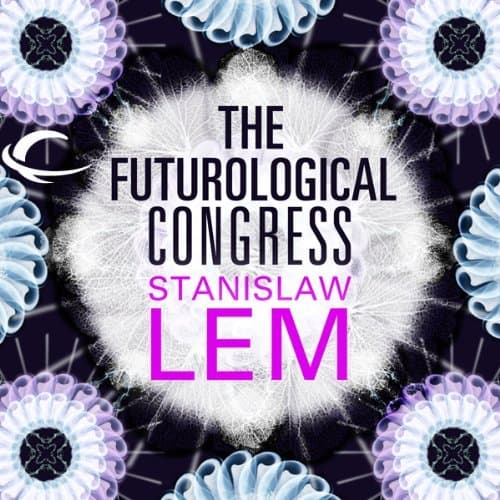
The Futurological Congress review and analysis
Narrated by: David Marantz
Length: 4 hrs and 51 mins
Release date: 08-27-12
This book was originally published in 1971 by the polish author Sanislaw Lem in paperback. The 2012 release date is simply for the audible audio-version of it.
Story
The main character, Ijon Tichy is sent to the 8th World Futurological Congress in Costa Rica which aims to discuss possible solutions to the world’s overpopulation crisis.
With the Japanese team suggesting that self-sufficient living under the waves of the ocean to be the way to go, and a few other wild ideas.
After riots break out due to lack of food or something to that equivalent and the government deciding to bomb the area with a new kind of chemical weapon designate ‘Love Thy Neighbour’, being chemicals that cause people to be more accepting of others, with the members of the congress being provided gas masks that unfortunately have the ability to malfunction and give an increased dose of the chemicals, causing people to ‘repent for their sins’ etc.
Tichy unfortunately gets a double dose of the hallucinogens due to him drinking the tainted hotel water previously, and then eventually removing his oxygen mask and breathing in the ‘Love Thy Neighbour’. He then seems to go on multiple hallucinogenic trips eventually getting stuck it this state.
He ends up being cryogenically frozen to await for a cure to his seemingly incurable state, and wakes up in the year 2039 where the population is now 25 billion, but where society as complacent due to the government fully embracing Psychological Chemicals, termed ‘psy-chem’.
Everyone is happy, and smiling, and as so much has changed the nurses decide to integrate Tichy little by little so as to not overwhelm him with the changes.
Tichy meets up again with his friend Trottelreiner who is more tuned in that the average person who reveals that this current world is in fact a masquerade to hide the fact that the world is much worse than it seems. He gives Tichy a sniffing solution which temporarily unveils the psy-chem mask, and reveals the world for what it is, which is much less utopian than it is shown to be.
The story showcases different scenarios of how a society/ world with an overpopulation problem could be handled.
Parallels to Popular Culture
There are some pretty obvious parallels to popular culture, the main ones being The Matrix, Futurama, Equilibrium and the book 1984.
The Matrix in the fact that it showcases an earlier dated world which actually turns out to be a veil to hide a much more dystopian world in which many things have gone to shit, and that there are a few ‘awoken’ individuals who are aware of this, and try, possible in vain to uncover the truth and bring about some degree of humanity.
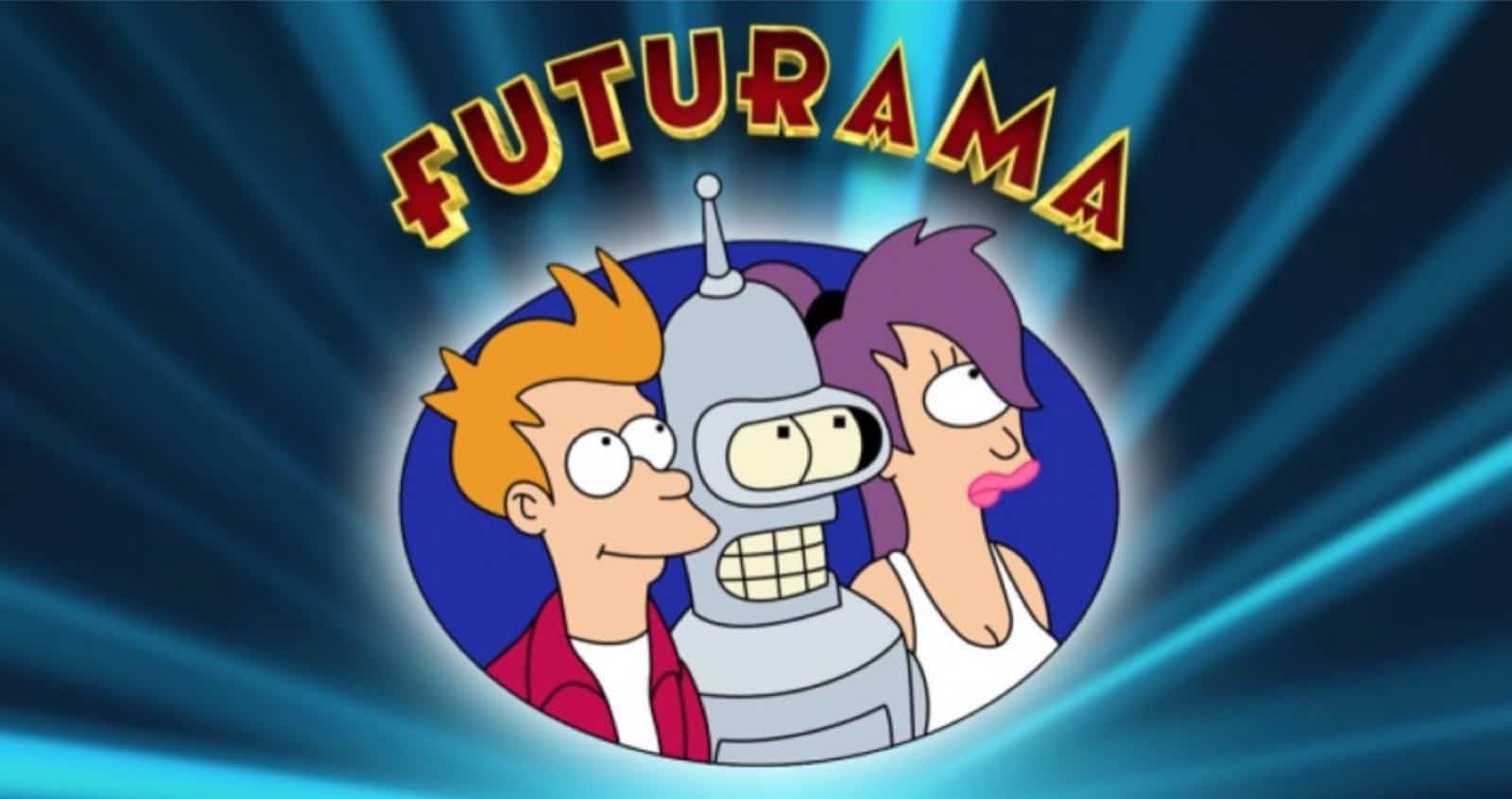
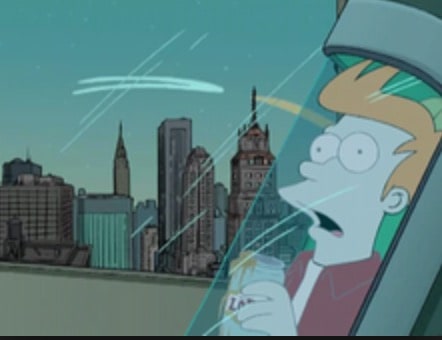
Futurama, in the fact that Fry (the pivotal character in the series) is cryogenically frozen and awoken in the year 3,000 and has to relearn how society works and the future inventions and products etc. Which includes whole new concepts, whole new histories, ways of thinking and words.
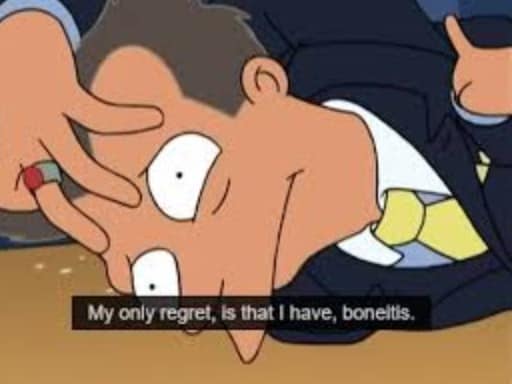
Also, the fact that there’s a character known as ‘that 80s guy’ who has a chronic disease that is not curable in his time, and is therefore frozen to await a cure in the future. In Futurama this character suffers from Chronic Bonitis, whereas Tichy suffers from incurable hallucinogenic delusions.
-

- Main character cryogenically frozen
-

- 80’s guy

-

- Disease that’s only curable in the future

-

- Spray on clothing

The Futurological Congress is crammed full of ideas and potentials, much like Futurama, for example books are eaten to gain their knowledge, the stomach was shown to actually be the bringer of knowledge, “Books are no longer read but eaten, not made of paper but of some informational substance, fully digestible, sugar-coated.”
Plus, inventions like spray-on clothing are exactly the same between the 2, etc. For instance, can take an ‘arithmetic pill’ to understand complex mathematics.
Also targeted hallucinogenic pills that simulated armed forces or even alien invasions etc.
“A real tank now costs about a million dollars, while a hallucinated one amounts to less than 1/100th of a cent per person, or centispecter per spectator. A destroyer costs a dime. Today you could fit the whole arsenal of the United States inside a single truck.”
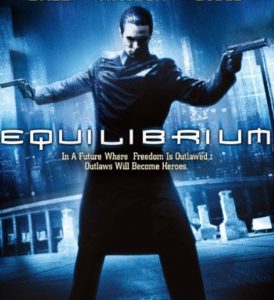 Equilibrium, has similar concepts in the fact that everyone takes pills known as ‘suppressors’ to suppress normal human emotions such as anger, fear, stress, even happiness which was determined the downfall of society, to thus live harmoniously with each other.

Another take on how to control society which is plagued by overpopulation and therefore war.
1984, is very similar in the fact that language has been dramatically changed, a whole new lexicon has to be created because of the major change to concepts of society, inventions, values and norms etc.
 Whereas the book 1984 goes into serious detail at the end of the book, more like an appendix, The Futurological Congress goes into detail as the book progresses, which makes much more sense.
Also paralleled in the fact that the government is supposedly offering a sort of Utopian society whilst actually covering up a dystopian situation. Difference in the morality of the situation however.
The Futurological Congress even references 1984 by inference, saying that ‘this is not one of those dystopian societies often referenced in science fiction books, in fact society seems more utopian’ (or something to that effect) mentioned earlier on after Tichy awakes in 2039.
The Moral Concern
In fact, many science fiction books deal with the problem of overpopulation whether its stated explicitly or not. Many deal with the concept of a lack of resources for instance which means that they have to travel to the stars.
Or that as war has ravaged the earth, therefore they need to relocate the population or send seed ships or terraform some other planet etc.
Or in the case of this new movie ‘Titan’ they genetically modify humans to force evolution to survive in a different environment.
All of this in reality stemming from an overpopulation problem.
Ultimately if there were enough or even too many resources for the population then everything would be fine, yet that is simply not the case, and seemingly never been the case in the grand scheme of the world, thus the reason for wars is to claim other people’s resources, and create a better life for oneself etc. Which has knock-on effects of destroying the environment etc.
The difference with any science-fiction book is how they deal with the morality dilemma that overpopulation brings. Do they simply justify killing of other people to ensure lowering of population? Do they pull a China and impose a 1 child limit? Or do they impose reasonable measures such as education, greening processes, world protocols etc to make sure the world comes together to look after its people and the environment etc?
“The last vestige of humanity is not to kill the world but to take away the pain of the end if the world.”
This is the line given from the overseer to Tichy in explanation for the world in which they live.
Essentially describing that the world is dying regardless, much like an old person with a terminal disease….therefore there is nothing left to do but to make the last moments as painless, comfortable and even as happy as possible.
So rather in this book, the world is given hallucinogens to make people feel decent and see a world of happiness rather than the apocalyptic world that it actually is.
All of this being said, the root cause of any problems, are never really tackled.
That 1. There is overpopulation, and that overpopulation itself is a key problem that needs to be addressed…NOT accommodated.
And 2. The greed in society that constantly wants more and more is also not addressed which allows people to use more resources than they need, or to create zero-sum games for other people in which they interact, meaning that for them to have more, others will have to have less, therefore causing misery, famine, wars, and death.
Even in this book, people are not simply stopped from reproducing… (although in fact its inferred that these measures have eventually come into place), but rather population has continued to exponentially increase to the point where there is no hope left for humanity.
A bit like the issues of Gun Control in the USA. IF gun control is NOT an issue that can be discussed, it is NOT to be negotiated in anyway, yet the aim is still to reduce death and crime etc., then the only option left is to address all the ancillary problems surrounding the issue such as mental health, security issues, gun awareness, training, increased education for the general population, better income Equality for society, increase minimum wage and therefore less stress on society etc.
IF that’s the case, that all these ancillary issues can be addressed and fixed, then the gun control is actually not an issue.
However, the easiest route of course IS to address gun control.
In the same way that the easiest way to combat the problems of overpopulation and the knock-on effects is to reduce the number of people in the world… but failing that…all the ancillary issues surrounding this have to be addressed.
It’s just what humans deem is considered humanity.
Which ironically of course, humans end up choosing the other option which is a much larger problem to tackle and often causes way more deaths than if the decreased population option was chosen.
A random quote:
“What was civilisation ever, really?, but the attempt by man to talk himself into being good? Only good, mind you. The rest had to be shoved somewhere out of sight, under the rug. Which History indeed did, at times politely, at times police-ly, and yet something was always sticking out, breaking loose, overthrowing.”
Listenability
The narrator and style of writing is great. The style switches from 1st person point of view to diary format and back, yet each change reflects a change in either time or situation, so it is easy to listen to.
Recommendation
For those that have read books like 1984, and mostly enjoyed that concept, which in fact is similar to the Matrix dystopian/ masquerade world dilemma etc., as well as the underlying concept of the movie Equilibrium…then I would seriously recommend this book.
Also for those that like to see where modern science fiction and fantasy derives some of its ideas and imagination cues from, for example Futurama, then this is a must listen.
In this way its much the same as ‘2001 A Space Odyssey’ , -whilst that was not a great movie by itself, you could appreciate it knowing that many TV shows, cartoons, books etc. that you DO like, drew inspiration from this original movie to create their own concepts.
The sheer ideas represented + level of future ponderings is pretty impressive.
Plus, it’s a relatively short book, at just under 5 hours long, it’s worth giving it a listen.
Honestly, thoroughly recommended.






Recent Comments