
The original name of this article was ‘Things I would have done differently if I had my time in the Netherlands again‘
Ok so I’m writing the article, obviously in hindsight.
If I were staying another year, I would change many things, and it would probably ultimately lead to a happier life, but I’ve made my decision, and that was to leave, just as I made my decision when I came here.
‘To be stupid, is to never learn from your mistakes.
To be smart, IS to learn from your mistakes.
But to be wise, is to learn from the mistakes of others.’
I write this so that others may learn from my mistakes, and to tell people the things that I wish I knew before coming to the Netherlands.
Weather, and how that will impact your life.
The weather in the Netherlands is shit. I’m not sugar coating it, I’m not trying to be mean. But unless your idea of a good time is a lot of rain, a lot of wind, grey skies even when its not raining, cold & darkness or a combination of all of these for around 6 months of the year, then the definition stands. The weather is shit.
But in knowing that it is shit, there are things that you can & should do.
TRANSPORT
You NEED a car.
Yes, it IS possible to catch public transport everywhere, and the Netherlands is a country better than most in that regard… but it’s still quite expensive.
My mistake in this, is that I bought a motorbike. Now I like motorbikes, and I’m an all-weather rider, I would ride even in Beijing where it was -15 sometimes (not including the wind-chill factor).
But being rained on, & then plus the wind-chill factor + just the ferocity of the wind here….well, its not good to be on a motorbike.
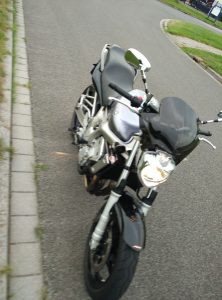
If you are going to buy a bike, and ARE going to do long journeys with it…you NEED one with a windscreen.
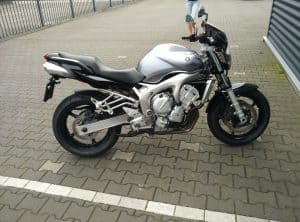
My bike pictured here, windscreen is just not enough
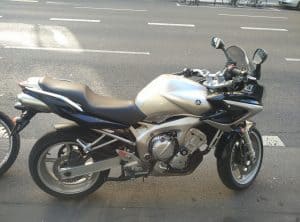
This windscreen is much more appropriate
My bike was a naked bike with a small windscreen, …but it wasn’t enough.
If you ARE going to have a bike…. It needs to be a heavy bike. This is for stability. Most bikes in the Netherlands are 600 and up, so are naturally quite heavy, but it needs to be this way because highway speeds are 120-130 kms per hour, the country-side is flat, which means the wind comes straight at you, and you need to be stable on the road.
Driving in the Netherlands IS boring. My journey to work was literally just straight for 20 mins at 120 km/h followed by straight for 10 mins at 130 km/h. Boring as hell, all the way being tackled by wind and rain.
The video below I made to show an example of just how bad driving in the Netherlands on a motorbike can be.
Anyway, yes, riding here is boring as hell. No twisties, nothing… + they really enforce speed limits here, so if you try anything…you get hugely prosecuted for it.
Also, due to wind noise, you can’t hear anything, not even the cars around you so much, so you may as well listen to music or audio books.
So driving in the Netherlands is NOT fun, regardless of whether you’re on a bike or in a car.
If your concern is about parking, yes…on a bike of course its easier, however if you’re going into Amsterdam, chances are you’re going to want to take public transport anyway.
BECAUSE the weather is so shit here, you need to wear weather appropriate clothing + protections if you’re going to be riding here. It means that it takes you roughly 30 mins more each day to put on all your clothing as compared to simply getting in a car.
Depending on where you work, parking may be free anyway, and parking nearby your home (for a car) may just be 50 euros for the year.
[I live in Leiden – parking on the street is 50 euros for a permit valid for 1 year, & work nearby Schiphol airport in a logistics park, where parking is free]
Basically, there is NO advantage to riding a motorbike here in the Netherlands, at least for your commuting vehicle.
The point is …get a car. The warm journeys on the way to work is definitely preferable compared to that on a motorbike. + with a car you just have to wake up, get dressed normally & get in your car, whereas a motorbike you have to do that, then armour up, then put on all your wet weather gear.
What about traffic jams?
Traffic jams are usually caused by canal bridges going up, or…by wet weather, slippery roads that has caused a crash.
If there is a crash then everyone is held up, everyone will understand if you’re late to work, and there is nothing you can do about it. Being able to parse through traffic doesn’t benefit you THAT much. You’ll probably at most be able to go 40-60km/h anyway, because of the wet roads…as its still dangerous to you too.
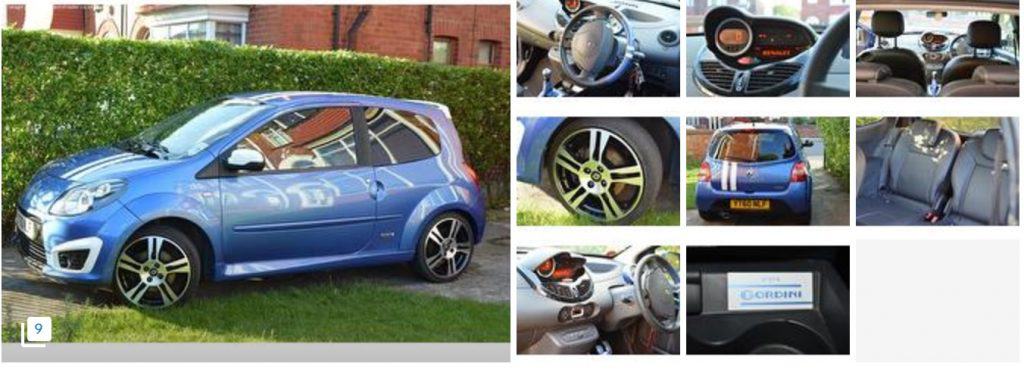
This is the car that I should have bought. Fun, sporty & still easy to park
What about fuel savings?
A 600 cc bike isn’t as economical as you’d think. There are many small European cars that have a whole bunch of ‘eco-tech’ features, 1.2 litre engine that are low boost turbo charged or whatever and still offer obviously way more creature comforts than a motorbike.
It may be ‘a cage’ but in this country, its needed.
Driving- set cruise control as often as possible. Speeding fines are bloody expensive here. I know because I’ve received many of them.
All that being said, if you still really do want to get a motorbike, or are keen to see the scene, check out this facebook group: https://www.facebook.com/groups/wierijd/ (the translation is ‘We ride’)
Museum card. – This is one of those things that I would highly recommend.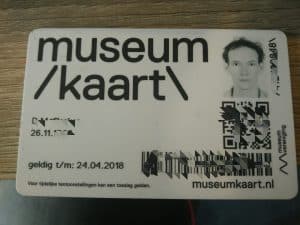
Because of the weather, there’s only limited things you can do, or at least want to do.
The Dutch are used to their weather, so they play soccer & hockey what not even when its raining, but chances are…you won’t want to.
You’ll take indoor activities over that.
So, get yourself a museum card. The Netherlands has some great art museums and many are genuinely worth the visit. Some are just the generic ‘tick it off the list’ sites that you feel you SHOULD do, even though you don’t really want to.
But still, the museum card costs 60 euros. And in return you get to visit more than 400 museums for free. & get discounts on others (like a discount ton the Banksy art museum in the centre of Amsterdam)
Some you will still have to register online to get a place to visit, like the Van Gogh museum, (because its very busy, and spaces for each time slot.. are limited)
But others you just turn up, they scan it, and in you go.
My mistake? I got this after I visited the Rijksmuseum & Van Gogh museum twice each. Basically I spent around 40 euros before buying the 60 euro card.
The point is, if you have colleagues, or friends & family visiting, chances are, they’re going to want to tick these kind of museums off their list. The Rijksmuseum where Rembrandt’s ‘The Night Watch’ is located, is always a favourite.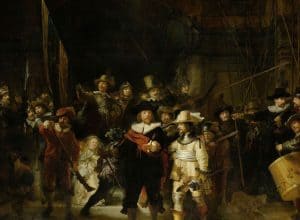
On any rainy day where you’re bored, you can just go in take in a museum, educate yourself… but at least with this you won’t be THAT bored.
Getting yourself settled?
(BSN, Bank, Transport card, Health Insurance, License, Gym, Learning Dutch?)
So, one of the most important things to do… maybe your company will do this for you, but if you are in my position, then you can’t rely on them… but in the Netherlands, everything revolves around your BSN number.
If you are not Dutch, then this comes from a combination of your house where you live (can’t be a hotel) + your work contract.
It is important to get this settled AS SOON AS POSSIBLE.
You need a BSN to put a vehicle into your name, to apply for medical insurance, to go to the doctor (properly), to apply for your license, …for basically anything governmental, plus to apply for security / safety clearances at work.
So, this is a MUST.
You can get a pre-BSN by showing that you have a work contract, and you’re living in a hotel / holiday home area that cannot be registered at. And you can begin using this to fill out required things.
But try to find accommodation as quickly as possible.
This sounds strange, but Facebook is a good resource for this.
Especially if you don’t want to go through the usual dickhead housing agents.
If you’re wanting to live in Leiden for example, go on ‘Leiden Housing’ on Facebook, and people will be advertising.
https://www.facebook.com/groups/leiden.housing/?ref=bookmarks (this is the one for Leiden)
If you’ve come to the Netherlands by yourself & are relatively young, then I would definitely recommend living in a student city and finding share-housing. It will be cheaper, and you’ll save more money, plus you’ll have instant access to a group of people that will know the city well and be able to recommend you a bunch of things to do. I’m glad that I lived in a share-house, even though the house was weird as hell.
Anyway, to register your address, you simply need to go to your local city-hall with your passport and tell them the address that you’re living at.
No need to give proof… but having some sort of contract doesn’t hurt.
Essentially you can just register at a friend’s house if you want, although the government will calculate how much council tax, water use etc. a house needs to pay, according to how many people are registered at the house….so note. It shouldn’t be a permanent solution.
The phone number for all city-halls in the Netherlands is the same: 14071 (that’s it) You will call it, it will say something in Dutch, for which the meaning is “state your area in which you live” Clearly speak into the phone your area eg. “Leiden”, and you’ll be transferred, and can book your appointment, or ask your questions.
Bank
Get your bank account as soon as possible.
Find out what bank the company you work for uses, then apply for a bank account at that same bank. It makes salary transfers easier, plus colleagues can help should there be any problems.
My bank is ING, and I’ve never had any problems. 
The Netherlands doesn’t like credit cards so much. I think as a result people have less debt.
In fact, not many supermarket or even shops take credit cards.
But if you’re going to be having business trips out of the Netherlands, or even flying to other cities for weekend getaways, this is absolutely necessary…because many airlines, or booking sites don’t take the cirrus, Maestro things that most of the Netherlands take. You NEED a credit card at least for this.
+ if you get to those petrol stations where they’re not manned by anyone, but they take card 24/7, you’ll find that they actually only take credit cards. So again, necessary.
Chances are the limit will be 1000 euros, but usually that’s enough to book a flight.
Learning Dutch?
It is NOT necessary. This sounds terrible, because previously I thought it’d be a huge shame if someone was to live in a country and not speak any of that country’s language.
But in the Netherlands, …sure its nice to have, but it is NOT NEEDED.
The ‘NEEDED’ , ‘nice to have’ is an important distinguishment here.
The fact is, all Dutch people can speak English flawlessly. (often with no accent) Or rather, the younger generation do, and the older generation if they’re working for an international company like you’re probably working in, speak more than enough to get by.
You thought German people were good at English? Well, the Dutch are better.
For my situation? I work for a Chinese/ American company working internationally… I need to speak Chinese & English, and I do. Dutch, even though I’m working in the Netherlands, is just not needed.
Train cards?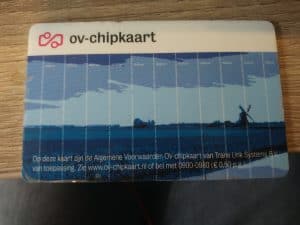
Even though you’ll be driving to work… seriously unless you’re working in the city that you’re also living, in which case a bicycle or scooter with a huge windshield is enough, then you’ll be driving.
But being able to catch public transport is a blessing sometimes. Want to go and meet a friend in Amsterdam and enjoy a couple of drinks? Well you sure as hell won’t be driving back in that situation. And parking overnight…the fee is 50 euros for 1 night. I know this, because that’s exactly what I did once. Damn expensive.
Anyway, get yourself an OV chipcard. This will allow you to take any kind of public transport in the Netherlands. If you’re thinking…’hey, if I’m not going to take this often, then do I really need this?’
Well, it turns out there are 2 different train companies, if you are down south, and have to switch trains …often you have to pay for 2 tickets. Basically this is just more convenient.
You DO have to keep around 20 euros on it at all times, but its honestly worth it.
Not having to queue up and figure out those ticket machines etc. is pretty good too.
Health Insurance – Health insurance is mandatory to all those spending more than 3 months in the Netheralnds, but should be done as soon as you’ve got your BSN number.
It doesn’t matter if you have good travel insurance. (that was my situation, so I decided to put it off for the 3 months) Get it as soon as possible.
You will require your BSN number, but in the Netherlands, the point is that once you’ve got your health insurance card, ALL doctors appointments are free. The GP, the dentist, the surgeons, the physiotherapy …all of it, free. You don’t even need to ‘check-out’ or even show ID. So great system that. But you DO need your health insurance card, and for that you need your BSN.
Here’s the site that is recommended to use: https://www.independer.nl/zorgverzekering/intro.aspx
It compares all insurance of all types according to what you need.
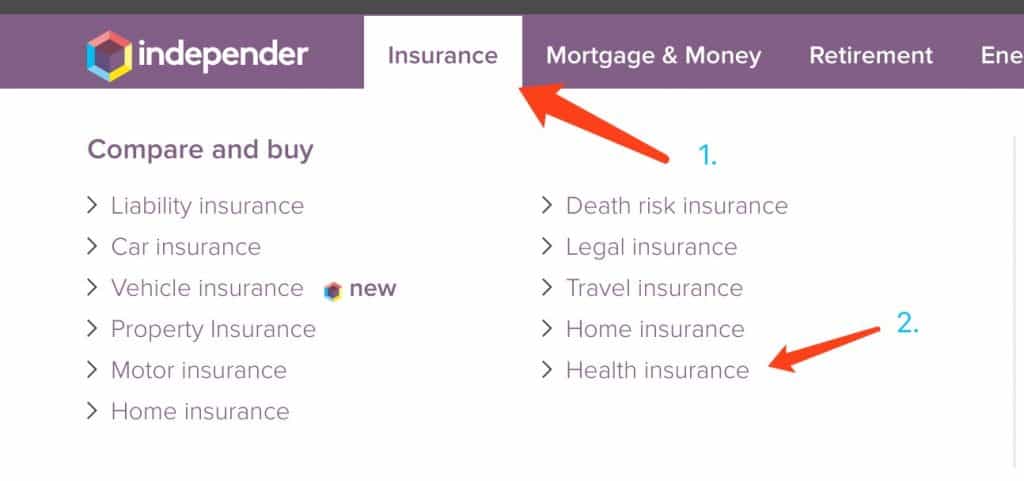
As you can see, you can also get your vehicle insurance from this site too.
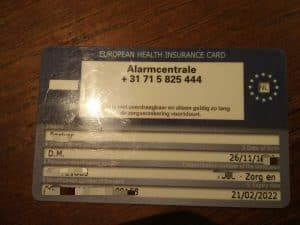
The back of the insurance card. You can call whilst overseas & they will pay up to 200% of the costs from what it would cost in the Netherlands. (Note. this may not completely cover you if you are in the USA)
My insurance was around 114 euros a month, and it covers me if I go abroad as well. And considering that the big thing you’re worried about when travelling abroad is medical costs, this is a really great thing.
Your contract will be ONLY in Dutch though, so get a Dutch friend to explain certain policies. Most of it doesn’t matter, but the thing about overseas expenses DOES matter.
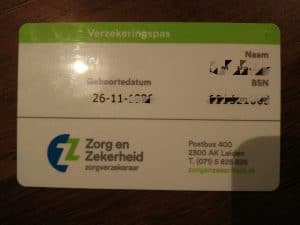
My own health insurance card. They will ask you for your BSN number, as all things Dutch go through this number
For me, I was injured abroad, and the Dutch health insurance paid for most of it. Which is great. Most but not all. The Dutch insurance will pay for 200% of what it will cost in the Netherlands, so if you go to an American-style private hospital as I did, chances are… it won’t cover everything, but its way better than nothing, and way better than your standard travel insurance where you have to pay for everything 1st and then claim it back.
The Dutch health insurance is still covering all my post-accident treatment, including GP consultations, Surgeon consultations, and now that all that is done, physiotherapy sessions.
Use the Independer website and go through it with a Dutch colleague to select the plan that is right for you. Make sure you pick the international travel option & make sure you receive the card from them and keep it on your person at all times.
As soon as you have your Dutch insurance, find out a local General Practitioner Doctor and register at their offices. It takes some time for it to be processed, and you don’t want to have to do this, when you really need to see a doctor.
License– Again you need you BSN number [I will write a separate article on how to exchange you home country’s license to a Dutch license soon]
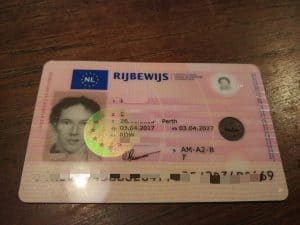
The driver’s license is pink, which makes it very easily identifiable
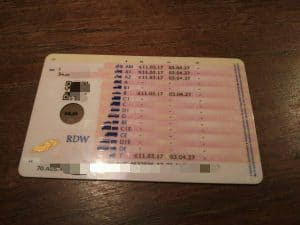
The backside lists out all the vehicles you’re ‘qualified’ to drive. (or rather the Dutch equivalent of your home country’s license)
If you benefit from the 30% ruling which I assume many expats will do, then they allow you to exchange your previously held license over to a Dutch one.
Note. You DO actually have to exchange it. That means you hand over your countries one, and they give you a Dutch one in return. When you go back to your home country, you will have to exchange your Dutch one back to your home country’s one.
What is this 30% ruling?
Basically its about attracting foreign talent with less income tax, and getting these people to work straight away to contribute to the Dutch economy rather than limiting them by not having a drivers license or jumping through hoops for other thing which usually detracts away from their ability to work efficiently
Here’s a good run-down of the 30% ruling for extra reading: https://www.iamsterdam.com/en/living/take-care-of-official-matters/highly-skilled-migrants/thirty-percent-ruling
Note. Get your company’s finance person/ accountant working on the 30% application as soon as possible. The process takes a while, you have to prove a few things, and what-not. Plus, to exchange your driver’s license, you’ve only got a time limit of 6 months, so the tax ruling has to be given before this.
If possible, its best to start finalising your contract before you arrive in the Netherlands. To be applicable for the 30% ruling, you have to have been specifically brought over from abroad, ie. You were not already in or nearby the Netherlands. So, chances are you already know, even when not in the Netherlands that you will be employed in this role and what your salary, terms of your contract will be etc. Best thing to do is organise this before you arrive, or at least as much as possible.
If you do NOT have this 30% ruling, there are a few countries that can exchange the license over directly, therefore no need for an extra test etc. But Australia, China, USA and many others are not one of them. I think this is because in these countries there are many different states, and many traffic laws are inconsistent with other states in the same country, so in fact you have a ‘western Australian’ driving license as compared to an ‘Australian’ driver’s license, even though having the WA one is a recognised Australian license. Or a North Carolinian drivers license isn’t a ‘USA license’ even though it allows you to drive everywhere in the USA.
Here’s some decent extra information: https://www.expatica.com/nl/visas-and-permits/How-to-get-a-Dutch-drivers-licence_100813.html
To understand which countries you can apply for direct transfer & which you can’t: https://www.iamsterdam.com/en/living/take-care-of-official-matters/cars-and-driving-licence/driving-licence
So… if you can’t directly transfer, then you will need to take the Dutch theory exam, available in English. And then do a certain amount of lessons and then take a physical driving test, and then you have the Dutch one. Crazy…especially as you already know how to drive
Until you’ve done all that, you’ll only have 6 months of being able to use your home country’s one. So if you’re here on holiday, fine you can rent a car, but if you’re working here…you should get going on passing these tests as soon as possible, because otherwise you won’t be able to drive at all.
If you have 2 licenses. My case is that I have my Chinese driver’s license & my Australian one.
In this case, make sure you exchange the Australian one. You can’t use a non-Chinese license to drive in china, so keeping that…if you intend to go back to china at any point, is a necessity.
Loop-hole discovered. As I said, you do have to exchange your home country’s license for the Dutch one, meaning you will actually give in your Australian/ American/ whatever license…and you won’t get it back.
The validity of your new Dutch license will be for 10 years (since the date of the exchange) regardless of when your home country’s one expires.
If your home country’s license expires whilst you have your Dutch one, they will send you a letter to renew it.
Provided that you/ or a family member gets this letter, it is possible to renew it from abroad.
For the Australian one, tell them that you want a new photo, and fill in this form http://www.transport.wa.gov.au/mediaFiles/licensing/LBU_F_DL_E13_PhotoKit.pdf Then call them and pay for your new license over the phone.
In this case you’ll have both your Dutch driver’s license & your Australian / home countries one. No need to exchange the Dutch one when you get back home.
Which means… if you ever decide to come back to the Netherlands/ Europe and you don’t have this 30% ruling again…. you don’t have to go through all of this bullshit.
Your limitations on your home countries license may not translate directly to your Dutch license. For example, my Australian license shows a ‘restricted’ motorcycle license, however in Australia its restricted to 660cc, which is still pretty big. In the Netherlands however, the ‘restricted license’ is to 35kw, which is way less than the Australian one.
However my Chinese license is a full (non-restricted) motorbike license, but because I didn’t exchange that one… it doesn’t show up on my Dutch license.
If you’re going to continue driving a bike that exceeds the Dutch restrictions….just don’t be a dick…and then you’ll be fine.
Gym– This is one for personal preference obviously. But… I would recommend joining a gym as soon as possible.
The Netherlands, due to its weather…is not a place where exercise comes naturally. In Australia you go for a surf, take walks in the park… you find that you remain fit relatively easily.
But here….not so much. + people really appreciate fit bodies and many Dutch/ European colleagues will talk about what exercise they do, or what gym they go to etc.
Getting yourself enrolled in a gym is thus quite necessary.
It also helps to relieve the boredom to some extent and gives you a huge boost of confidence.
Sport city is the one I joined, and it also has a whole bunch of squash courts, which is great because it provides access to a ready-made social circle too. https://www.sportcity.nl/
Navigation (less necessary)– Get yourself a Tomtom or the equivalent. Dutch roads change reasonably quickly, and your in-car navigation is probably not updated to accommodate for this. Whereas a device whose only business is navigation, most likely will be. They will also tell you where the speed cameras are.
When I 1st came to the Netherlands I drove a Mercedes C-class, and after a little while a Volvo V60, both of which had their own navigation systems built in, both of which got me very lost around Schiphol airport area and in the centre of Amsterdam.
Learn the different provinces/ areas in the Netherlands.
Watch this YouTube video 1st, to know some basic differences. (Just watch until they show the provinces)
I actually thought that the Netherlands, Dutch, Denmark, Holland were either all the same place, or somehow related, but I didn’t know in what way.
This is something that annoys Dutch people.
They can get over the fact that you don’t want to learn the language but at least they want you to have some reference & don’t confuse countries/ areas.
It also greatly helps for navigating.
So I realise I’ve more or less written advice for people who were coming to the Netherlands for the 1st time to work.
But the question of what would I do differently if I had my time again?
I’d buy a car, (small but sporty kind of car) INSTEAD of a motorbike
I’d get accommodation as soon as possible.
I’d talk with my local city-hall to make sure licenses parking permit, 30% ruling etc. were organised as soon as possible.
I’d push the company accountant to work on the 30% ruling as soon as possible.
I’d have gotten a museum card from the start.
I’d have gotten a OV chip card (public transport card) from the start.
I’d have thought about getting a run-about 2nd hand scooter for runs to the shop etc.
I’d have joined a gym as soon as possible.
I think with all of that, I’d have been much, much happier here.





Recent Comments